Article
The Silos Outside Hurlock Tell a Bigger Story Than Most Drivers Realize
The grain silos and covered corn piles outside Hurlock are a familiar sight to local drivers, but they also point to a much larger story about modern agriculture, harvest pressure, and how the Eastern Shore changed over time.
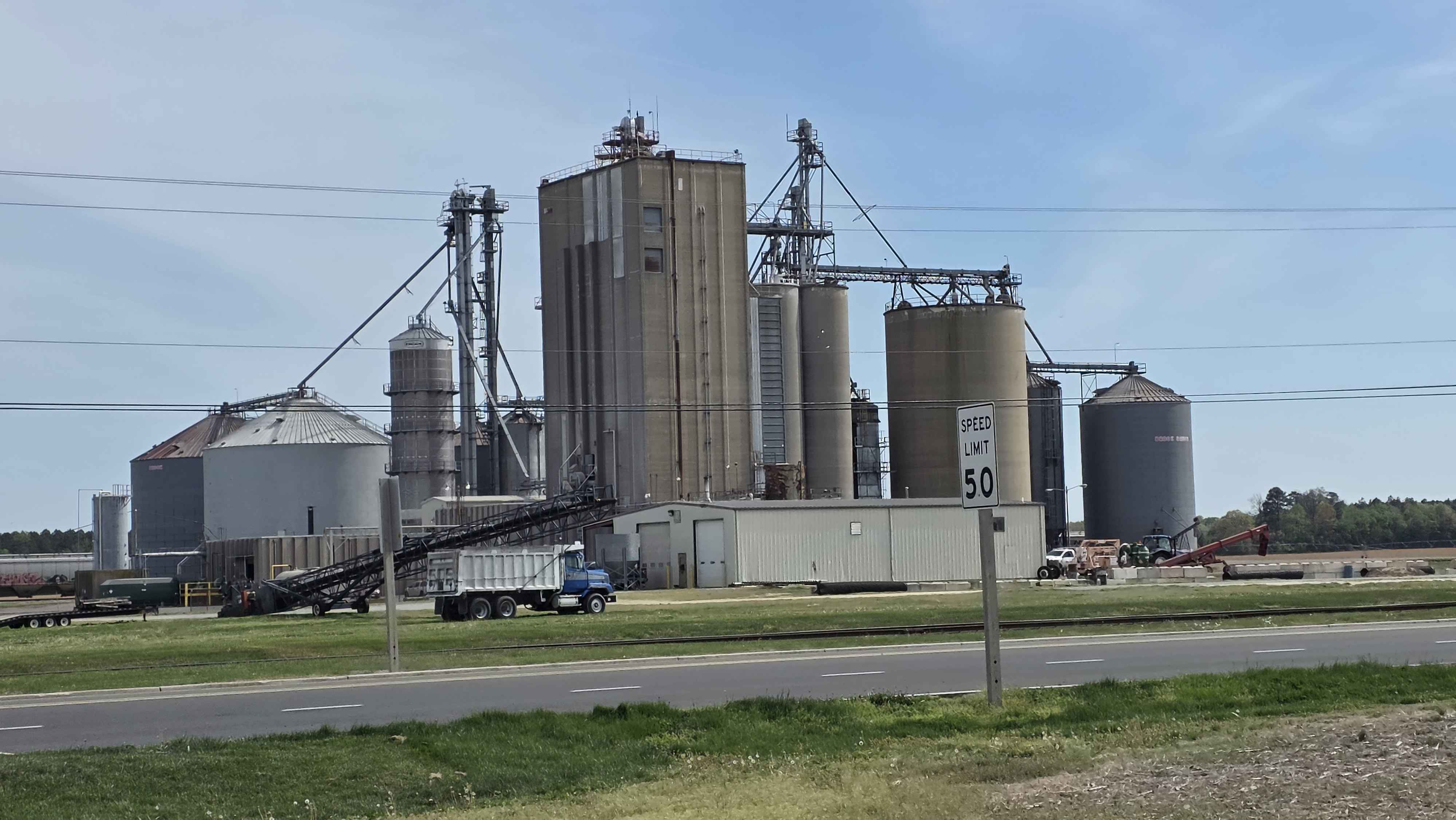
For anyone traveling the roads around Hurlock, the grain silos along Route 392 are a familiar sight. They rise above the flat landscape in concrete and steel, visible from a distance and easy to file away as just another part of the working Eastern Shore. People pass them every day without giving them much thought. But like so many things in this region, what looks ordinary at first glance is tied to a much bigger story.
The silos and grain-handling structures near Hurlock are part of the modern agricultural system that has shaped life on the Eastern Shore for generations. They are not just storage bins. They are part of a network that links local fields to feed mills, poultry operations, grain markets, and the broader economy that has defined much of Delmarva agriculture in the modern era.
That larger story matters, especially in a place like Dorchester County, where farming has long been part of the landscape and local identity. Fields of corn and soybeans are so common that they can almost disappear into the background. Grain facilities like the one outside Hurlock are part of the reason those crops matter beyond the edge of any one field. They are where harvests are gathered, dried, stored, moved, and turned into part of a much larger chain.
The Hurlock grain site is one visible piece of that system. Public information identifies Perdue’s Hurlock location as a grain operation serving the region, and over the years it has been part of the infrastructure supporting the Eastern Shore’s agricultural economy. That may sound technical, but on the Shore, infrastructure like this has real human weight behind it. It connects farmers, truck drivers, mill workers, equipment operators, and the businesses that depend on agriculture continuing to move.
The importance of sites like this becomes especially clear during harvest season, when the calm look of the landscape can suddenly give way to movement and urgency. Trucks roll in and out. Grain pours in from nearby farms. Equipment runs long hours. In bumper years, the pressure on storage capacity can become a story of its own.
That happened in dramatic fashion in 2000, when a record corn harvest on Maryland’s Eastern Shore pushed grain storage to its limits. Reporting at the time described huge outdoor piles of corn at the Perdue feed mill on Route 392 outside Hurlock, part of a regional effort to handle a crop that exceeded expectations. The temporary mountains of grain became a striking image of how productive Shore agriculture had become, and how much infrastructure was needed to support it.
What makes the new photos especially interesting is that they show the same general reality in the present day. The silos are a fixed landmark. The covered grain pile is the kind of sight many people will notice without fully understanding. It is unusual enough to catch the eye, but familiar enough that most drivers probably keep moving without learning much about it. In that way, the scene fits the larger story perfectly. This is one of those local landmarks people pass all the time without really knowing what it says about the place around them.
Moments like that reveal something easy to miss in everyday life. The Shore’s agricultural landscape is not static. It is active, responsive, and deeply tied to weather, markets, technology, and timing. A grain facility may look still from the roadside, but it represents constant movement behind the scenes.
There is also a broader historical thread here. Long before today’s large silos and mechanized grain systems, the Eastern Shore depended on smaller mills, local grain processing, and water-powered operations that served nearby communities. Over time, agriculture changed. Farms grew larger. Transportation improved. Corporate grain systems and feed networks expanded. Poultry production transformed the economy of Delmarva, and grain became even more important because it helped support that industry.
In that sense, the Hurlock silos are part of a long evolution. They stand at the modern end of a story that began with local mills and small-scale farming, then moved into industrial agriculture and regional supply chains. They are not ancient landmarks, but they are still historical in their own way. They represent a chapter in how the Eastern Shore changed during the 20th century and how agriculture became more interconnected, more mechanized, and more powerful in shaping local life.
And yet, for all that importance, places like this rarely get much attention. People photograph old churches, historic homes, and waterfront sunsets, and understandably so. But the grain sites, feed mills, and industrial edges of the Shore often tell just as much about who we are. They speak to labor, production, risk, and the realities of a place where land is still expected to work.
So the next time someone passes the silos and grain piles outside Hurlock, they may still see an ordinary piece of roadside industry. But they may also see something more: a working landmark of Eastern Shore agriculture, and a reminder that even the most familiar structures can hold a larger story than most people realize.