Article
Mallards at Great Marsh: A Familiar Sight at Cambridge’s Waterfront Park
A recent set of photos from Cambridge captured mallard ducks at Gerry Boyle Park at Great Marsh, the waterfront park many locals still call Great Marsh Park. The sighting is a reminder that some of the Eastern Shore’s most familiar wildlife remains easy to notice in the middle of town.
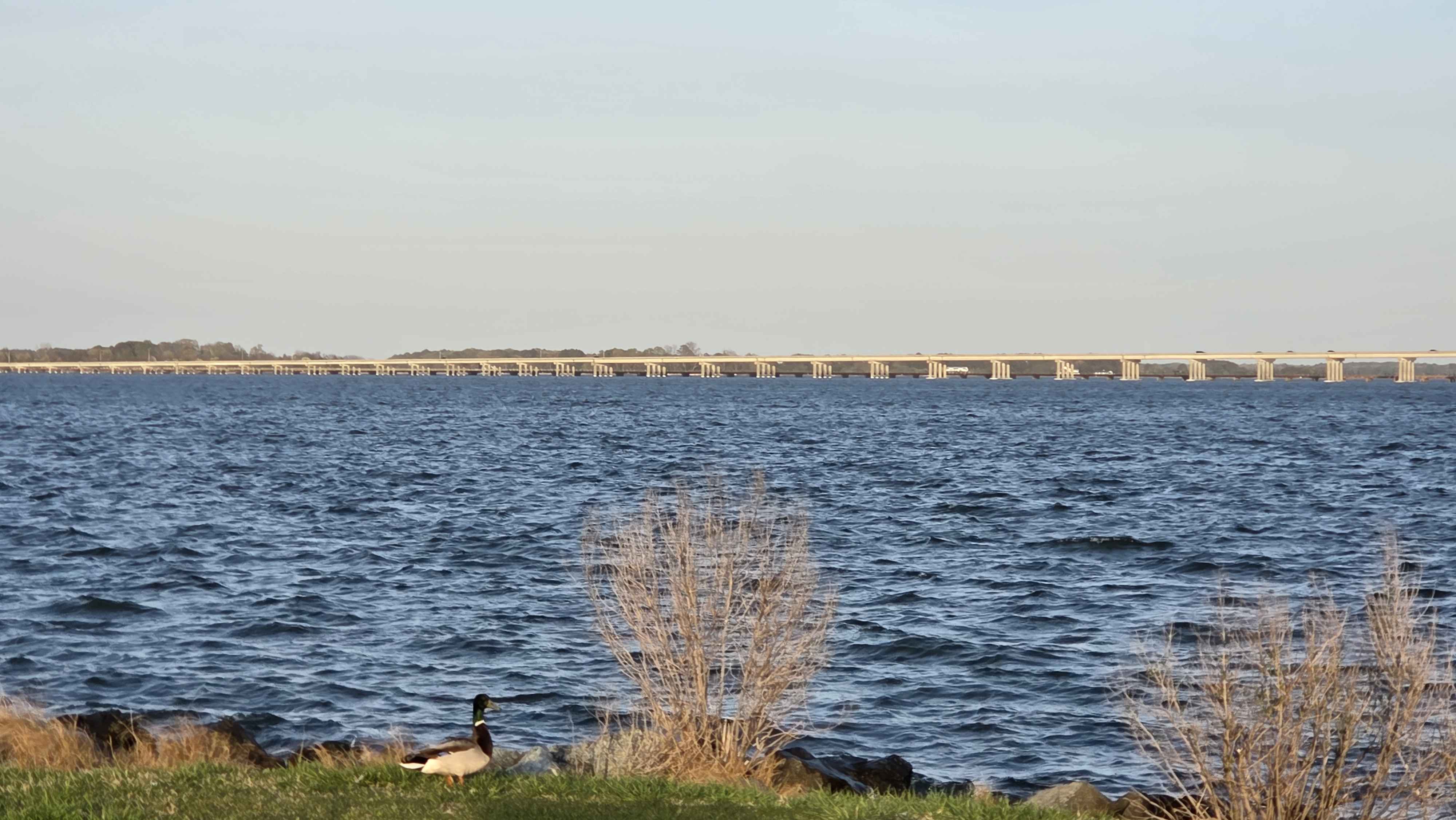
A recent set of photos from Cambridge captured one of the Eastern Shore’s most familiar ducks doing what mallards do best: keeping close to the water and looking entirely at home.
The birds were photographed at Great Marsh Park, the Cambridge waterfront park now officially known as Gerry Boyle Park at Great Marsh. The name changed in 2019, but many local people still use the older Great Marsh Park name, so both remain part of how the place is recognized.
In the submitted images, mallards are gathered along the water at the park, with the Choptank-side setting and shoreline vegetation helping place the sighting in the kind of habitat where ducks regularly feed, rest, and move through changing weather. It is not an unusual sight, and that is part of what makes it worth noticing.
Mallards are among the most recognizable ducks in Maryland. The male’s glossy green head, white neck ring, chestnut breast, and gray body make him one of the easiest waterfowl species to identify. Females are more softly patterned in mottled brown, but they share the same compact, steady shape and the same comfort around ponds, creeks, marsh edges, and public waterfronts.
That adaptability helps explain why mallards are so often the ducks people come to know first. They are at home in working landscapes, town parks, farm ponds, tidal edges, and protected coves. On the Eastern Shore, they can feel both ordinary and essential, part of the everyday bird life that quietly ties together freshwater, marsh, neighborhood shoreline, and open river.
Gerry Boyle Park at Great Marsh is a fitting place to spot them. The city-owned park sits out on a point along the Choptank River and offers broad views of the water in several directions. Birders have long treated the park as a useful place to scan for waterfowl, especially in the cooler months, when ducks and other winter birds gather on the river and in sheltered nearby water such as Hambrooks Bay.
Even so, mallards do not need rarity to matter. A place does not have to produce a once-in-a-season bird to be worth watching. Sometimes the value is in seeing a common species clearly, in a local setting people already know. A small moment like that can remind us that public parks are not only for events, walking, launching boats, or watching the weather. They are also places where wildlife remains visible in the middle of town.
That is especially true in Cambridge, where river, marsh, neighborhood streets, and public shoreline meet each other so closely. The Eastern Shore’s bird life is not confined to refuges and remote back roads. It also lives beside parking areas, playgrounds, piers, and city parks. Mallards, perhaps more than most species, make that plain.
For LifeOnTheShore, that is part of the appeal of a sighting like this. It is a simple reminder that noticing local nature does not always require distance or drama. Sometimes it means paying attention to a duck most people think they already know, and seeing it again in the right setting: close to the water, framed by reeds and shoreline, carrying on with the old daily work of being a Shore bird in a Shore town.