Article
A Man of the Shore
For more than half a century, Terry Crannell has helped people on Maryland’s Eastern Shore see Native history not as something distant, but as something still present in the land beneath their feet.
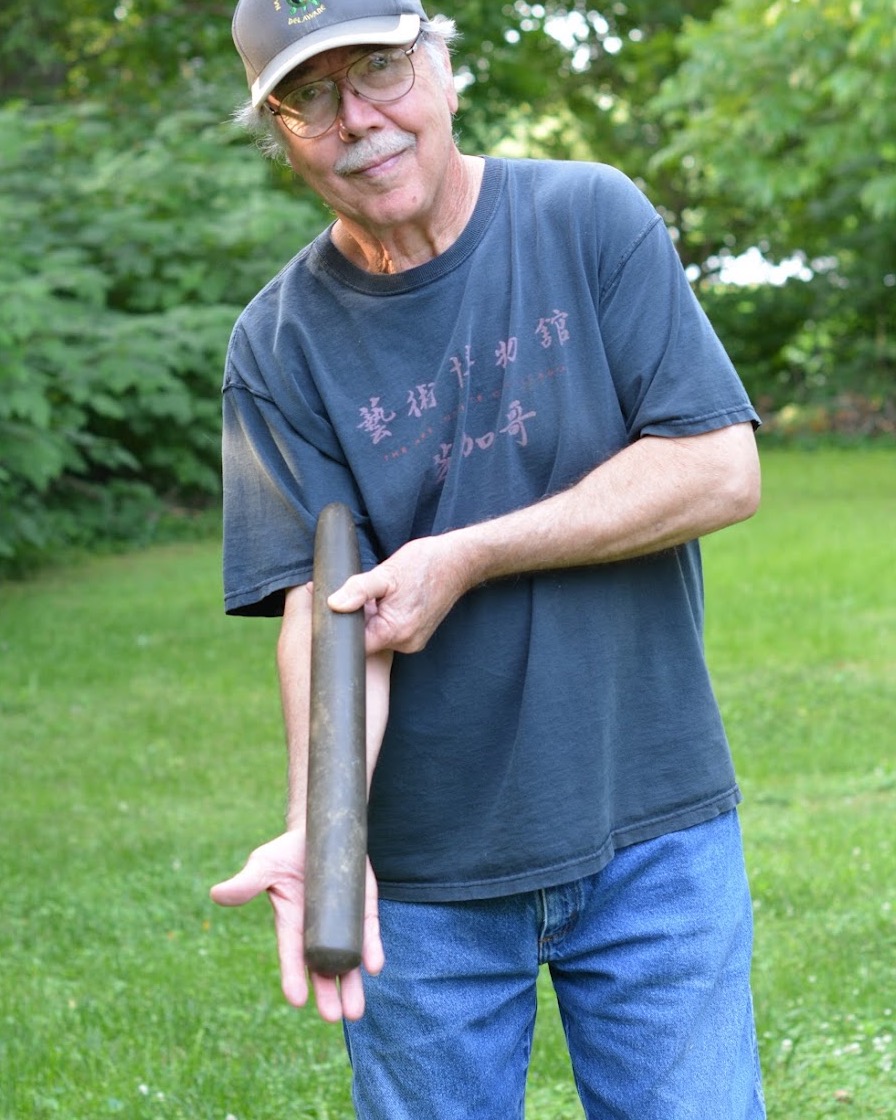
There are some people whose knowledge becomes part of a place.
For more than half a century, Terry Crannell has helped people on Maryland’s Eastern Shore see Native history not as something distant, but as something still present in the land beneath their feet.
Not because they hold an official title alone, and not because they speak for a region in any tidy or polished way, but because over many years they help other people learn how to notice what has always been there. On Maryland’s Eastern Shore, Terry Crannell appears to be one of those people.
For more than half a century, Crannell has been building, sharing, and interpreting knowledge about Native American artifacts and local history on the Shore. The work began in childhood and never really let go. According to a 2020 profile in *Attraction*, he found his first artifact in his grandparents’ rock garden at Cabin Creek, then deepened that early fascination in the 1960s by walking recently plowed farm fields near East New Market. Over time he organized finds by site, educated himself through reading, meetings, and conferences, and developed the kind of eye that comes only through long practice and close attention.
That long practice matters. It helps explain why Crannell became known not simply as a collector, but as a public interpreter of local material history. In earlier local coverage and event memory, he is remembered as the person visitors turned to when they brought in finds and wanted to know what they had. That role has real value on the Eastern Shore. A worked point, a pottery shard, or a fragment of old material does not explain itself. It becomes meaningful when someone with experience can help place it in a larger human story.
Crannell’s public record suggests he has spent years doing exactly that.
The 2020 *Attraction* article describes him as a longtime artifact hunter whose free hours, outside a 42-year career operating a Cambridge paint and body shop, were devoted to walking fields, studying finds, and sharing what he learned with others. The same profile says he served as past president of the Mid-Shore Chapter of the Maryland Archeological Society, shared artifacts through public shows and exhibitions, participated in regional Native American events, and in 2008 became Curator of Indian Artifacts for the Dorchester County Historical Society. In that role, he organized exhibits and helped educate Dorchester County schoolchildren visiting the museum.
Those details help bring the scale of his public work into focus. This was not a private hobby kept to a few shelves at home. It became a way of teaching, preserving, and passing along local history. It also became a way of helping people understand that the Eastern Shore is layered with much older human presence than many realize at first glance.
That educational thread appears again in other public references. A Talbot Historical Society event listing describes Crannell giving a lecture titled *Romancing the Stone*, focused on the long evolution of artifact hunting from the 1960s to the present day and the changing conditions that shaped it. The same summary describes him as a prolific collector, a founding member and past president of the South Dorchester Folk Museum, a longtime curator of the Dorchester County Historical Society’s Native American department, and someone who organized annual artifact exhibits, programs, and talks for years. Taken together, those references suggest a man who has not only accumulated knowledge, but repeatedly put it in front of the public.
That public-facing role may be the most important part of the story.
On the Shore, history often survives through people before it survives through institutions. It survives through those who know where to look, what to notice, and how to connect a found object to a broader landscape of memory. Crannell appears to belong to that tradition. His work seems to have helped bridge the gap between formal archaeology, local collecting culture, public curiosity, and regional history. He has spent decades helping other people see that the fields, creeks, roads, and farm edges around them are not empty ground. They are full of traces.
The article record also suggests a life textured by other Shore worlds. Crannell’s background includes a long career in autobody work, and family memory also places him in Delmar drag racing. Those details matter, but perhaps more as part of the larger picture than as the center of this piece. They suggest a life shaped by hands-on skill, visual judgment, material knowledge, and local reputation, qualities that do not feel far removed from the patient observation required to recognize artifacts and explain their significance.
Still, what stands out most is not the variety of worlds he moved through, but the constancy of the historical work itself.
For decades, Crannell seems to have done what many communities quietly depend on and too rarely describe clearly: he helped preserve knowledge by sharing it in person. At events, in exhibits, in talks, in conversations over found objects, and in the patient act of explaining what a piece might mean, he appears to have served as one of the Shore’s working interpreters of Native history.
That is not a small thing.
It means generations of local people, students, visitors, and fellow enthusiasts have had someone who could help make the past more legible. It means local history was not left entirely to labels, cases, or institutions, but carried hand to hand by someone who spent years learning how to read the land and what came out of it.
The Eastern Shore has always depended on people like that. The region’s history lives in museums and archives, yes, but also in memory, field knowledge, conversation, and the willingness to keep teaching others what a place holds. Terry Crannell’s long public life with artifacts appears to be part of that tradition.
And if that is true, then one measure of his importance is not only what he found, but what he helped others learn to see.