Article
Native American Heritage & Artifact Day Gave Visitors a Hands-On Connection to Shore History
Native American Heritage & Artifact Day brought people to Easton’s Waterfowl Festival Building on February 21, 2026, for a free day of artifact displays, cultural demonstrations, and presentations focused on Indigenous history and living traditions on the Eastern Shore.
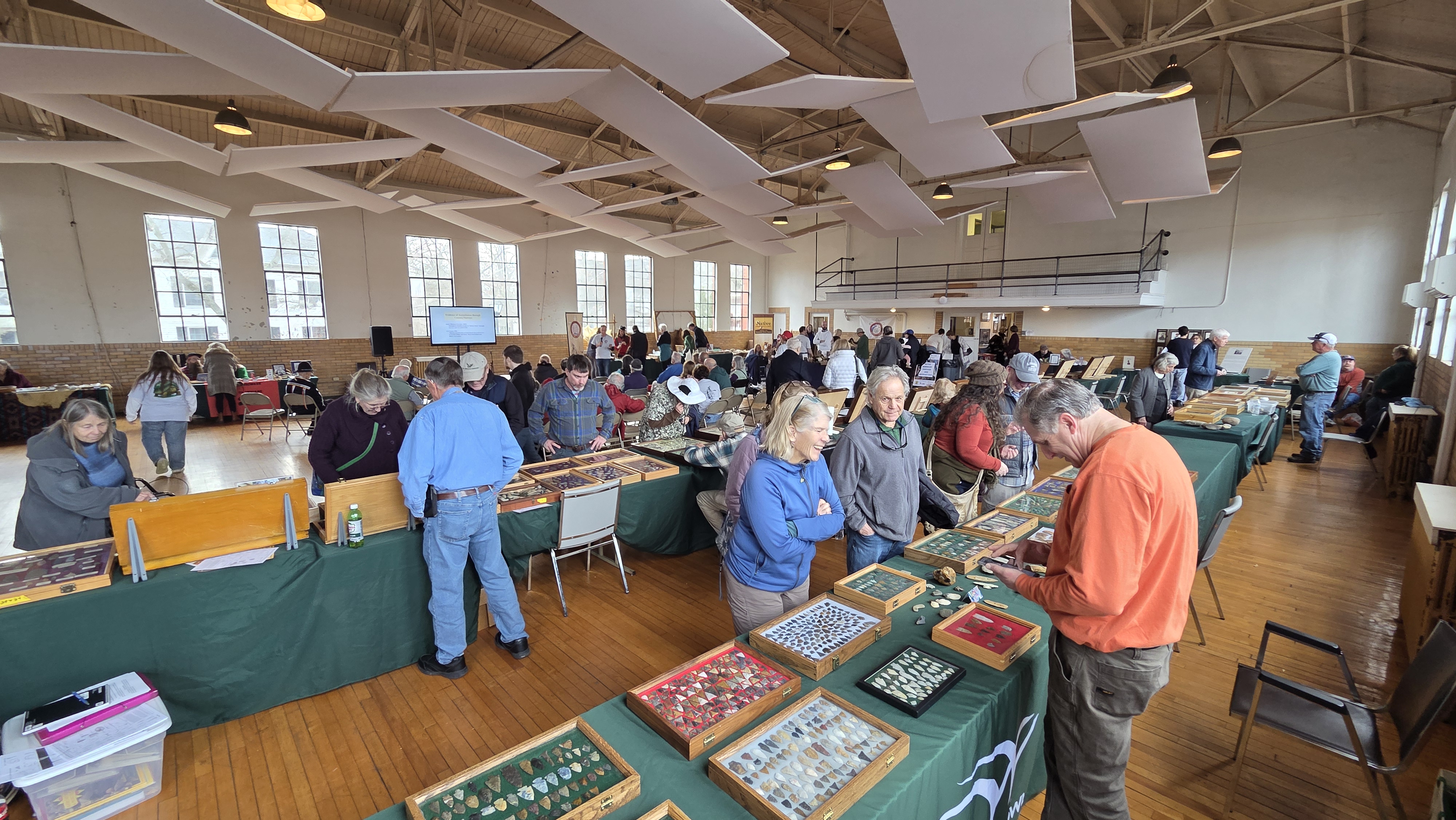
Native American Heritage & Artifact Day gave visitors in Easton a rare kind of history experience: one built not only around looking, but around listening, asking questions, and seeing skills demonstrated in person.
Held Saturday, February 21, 2026, at the Waterfowl Festival Building on South Harrison Street, the free public event brought together artifact collectors, historians, cultural presenters, families, and festival visitors for a day focused on Indigenous history and living traditions connected to Maryland’s Eastern Shore.
The event was presented by the Talbot Historical Society, with partners including Talbot 250, the Waterfowl Festival, Talbot County Free Library, and the Mid-Shore Archaeology Club. Public event descriptions emphasized that it was designed for families and individuals of all ages, and that broad welcome seems to have been part of what made the day work.
Visitors could move through displays of local artifact collections, including stone tools described by organizers as ranging from 500 to more than 10,000 years old. Some of the Talbot County collections were rarely seen publicly, which gave people a chance to encounter deep regional history through objects found close to home.
That local connection matters. Artifacts can seem distant when they are locked behind a museum label or treated as anonymous objects from “long ago.” At this event, they were presented alongside owners, finders, and interpreters, giving visitors a more personal way to understand the age, variety, and meaning of the material culture on display.
The day also included living-history demonstrations by Tradition Bearers of the Pocomoke Indian Nation, Inc. Public descriptions listed flint knapping, hide tanning with stone and bone tools, traditional turkey hunting techniques, river cane flute, and cattail decoy displays. Those demonstrations likely helped explain why the event left such a positive impression: people were not only reading about Native history, but watching knowledge and skill carried forward.
Presentations added another layer. Norris “Buddy” Howard Jr. was scheduled to present an illustrated lecture, “Pocomoke Indian Nation – Past, Present, Future,” exploring the Nation’s history and continuing cultural traditions. The event also included “Eight Coates, Seven Shirts, Fifteen Fathom Wampum,” a presentation by Drew Shuptar-Rayvis, a citizen and cultural ambassador of the Pocomoke Indian Nation.
For attendees, the appeal was easy to understand. The event offered a change of pace during Easton’s Chesapeake Fire & Ice Festival weekend, but it also offered something deeper than a festival stop: a chance to slow down and learn from people, objects, maps, documents, and demonstrations tied to the land and waters of the region.
That kind of experience can stay with people because it is concrete. A visitor can remember the sound of a flute, the shape of a stone tool, the patience of a demonstration, the surprise of seeing artifacts from thousands of years of human presence, or a conversation at a display table. One participating archaeology-focused social media account later summed up its experience simply: “We had a great time at the Native American Heritage and Artifact Day in Easton,” thanking everyone who stopped by its table.
The enjoyment people found in the day is worth noting because it points to what local history programming can do when it is handled with care. It can be educational without feeling distant. It can be family-friendly without being shallow. It can invite curiosity while still respecting the cultures and communities being discussed.
Native American Heritage & Artifact Day also served as a reminder that the Eastern Shore’s history did not begin with colonial settlement, courthouse records, or town charters. The Shore’s Indigenous history is deep, continuing, and connected to places people still live, fish, farm, travel, and gather today.
For LifeOnTheShore, that response was not abstract. Jamie Crannell attended and described it as “a great show” with “amazing people and tribes and artifacts to learn from and enjoy.” That firsthand reaction captures what made the day memorable: the event was not only informative, but welcoming, human, and full of opportunities to learn directly from people and objects connected to the Shore’s deeper history.
For LifeOnTheShore readers, that may be the larger takeaway from the event. People enjoyed the day not simply because there were interesting things to see, but because the experience helped make local history feel present. It turned heritage into conversation, demonstration, memory, and shared attention — the kind of public history that gives people a stronger sense of where they are.
Source note: This article is based on public event information from the Talbot Historical Society, Talbot 250, Discover Easton, What’s Up? Media, and The Star Democrat, plus Jamie Crannell’s firsthand reaction and a post-event social media comment from a participating archaeology-focused account.